云计算技术:揭秘AI与量子计算的未来突破性应用

云计算技术正成为驱动AI与量子计算突破性应用的核心引擎,为这些前沿领域提供了前所未有的灵活性与强大算力支持。

云计算技术:揭秘AI与量子计算的未来突破性应用

云计算技术正成为驱动数字时代变革的核心引擎,它不仅重塑了数据处理与存储的方式,更在人工智能(AI)与量子计算等前沿领域催生着突破性的应用。随着全球数字化转型加速,云平台已从单纯的基础设施服务演变为融合创新技术的聚合体,为AI模型的训练部署、量子算法的实验验证提供了前所未有的灵活性与算力支持。本文将深入探讨云计算如何赋能AI与量子计算的发展,并揭示其未来的融合趋势与应用前景。

云计算:AI规模化落地的基石

在人工智能领域,云计算技术解决了两个关键瓶颈:海量数据存储与高强度计算需求。传统的本地化部署模式难以支撑现代AI模型,尤其是深度学习模型所需的庞大规模。云平台通过弹性资源分配,使企业能够按需调用GPU集群与TPU专有芯片,大幅降低了AI研发的门槛与成本。

例如,机器学习即服务(MLaaS)已成为主流云服务商的核心产品。开发者无需自建复杂环境,即可在云端完成数据清洗、模型训练、优化与部署的全流程。更重要的是,云端的分布式计算框架使得训练百亿甚至千亿参数的大模型成为可能——这些模型正是自然语言处理、计算机视觉等领域突破的基石。同时,云边协同架构正将AI推理能力延伸至网络边缘,在智能制造、自动驾驶等实时性要求高的场景中实现低延迟响应。

量子计算与云的融合:探索计算新范式

量子计算代表着信息处理的范式革命,但其发展仍处于早期阶段,硬件稀缺且运行环境苛刻。云计算技术在此扮演了“民主化”的角色:通过提供量子计算云服务,研究人员与企业得以远程访问量子处理器,进行算法测试与应用探索,无需承担高昂的硬件维护成本。

目前,主流云平台已集成多种量子计算后端,支持用户使用熟悉的编程框架编写量子电路。这种“量子即服务”(QaaS)模式不仅加速了量子算法的研发迭代,也促进了跨学科合作——化学、材料科学、金融等领域的专家可以借助云平台,探索量子计算在分子模拟、投资组合优化等复杂问题上的潜力。尽管通用量子计算机尚需时日,但云化的量子资源正推动着混合计算架构的发展,即经典计算与量子计算协同解决问题,为未来突破铺平道路。

未来突破性应用场景展望

随着云计算技术持续演进,其与AI、量子计算的深度融合将解锁一系列变革性应用:

1. 科学发现加速:在生物医药领域,云上AI平台可分析海量基因组数据,加速靶点药物筛选;结合量子模拟,则能更精确地模拟蛋白质折叠与分子相互作用,推动个性化医疗发展。

2. 气候建模与可持续发展:利用云端的AI与量子混合计算,可构建更精细的地球系统模型,精准预测气候变化趋势,并优化全球能源网络的调度,助力碳中和目标的实现。

3. 下一代网络安全:量子计算对传统加密体系构成威胁,但云平台已开始部署后量子密码学的研究与测试环境。同时,AI驱动的云安全系统能够实时检测异常行为,形成动态防御网络。

4. 自主系统与元宇宙:云作为底层支撑,将为自动驾驶、数字孪生城市及元宇宙提供统一的算力池。AI负责内容生成与交互智能,量子计算则可能解决其中大规模优化与实时渲染的瓶颈问题。

挑战与演进方向

尽管前景广阔,但融合之路仍存挑战:数据隐私与跨域合规要求云服务商加强安全架构;量子计算的错误率与稳定性问题亟待突破;同时,AI模型的能耗优化也需持续关注。未来,云计算平台将进一步向“智能化、异构化、绿色化”演进——通过集成AIops实现自动运维管理,融合CPU、GPU、量子芯片等多元算力,并采用液冷、可再生能源等技术降低碳足迹。

可以预见,云计算技术将不再仅仅是工具,而是成为AI与量子计算创新生态的基础操作系统。它通过标准化接口、弹性资源与全球网络,让前沿技术的力量得以快速释放,最终推动社会各领域向智能化、量子增强的未来跃迁。这场融合变革才刚刚开始,而其边界,或许只受限于我们的想象力。

Merry Christmas

祝大家圣诞快乐!

def print_christmas_tree(height=5):
    # 打印圣诞树
    for i in range(height):
        spaces = ' ' * (height - i - 1)
        stars = '*' * (2 * i + 1)
        print(spaces + stars)
    # 打印树干
    trunk_space = ' ' * (height - 1)
    print(trunk_space + '|')

def main():
    print("🎄 Merry Christmas! 圣诞快乐!🎄\n")
    print_christmas_tree(6)
    print("\n愿你拥有一个温馨、幸福的圣诞节!")

if __name__ == "__main__":
    main()

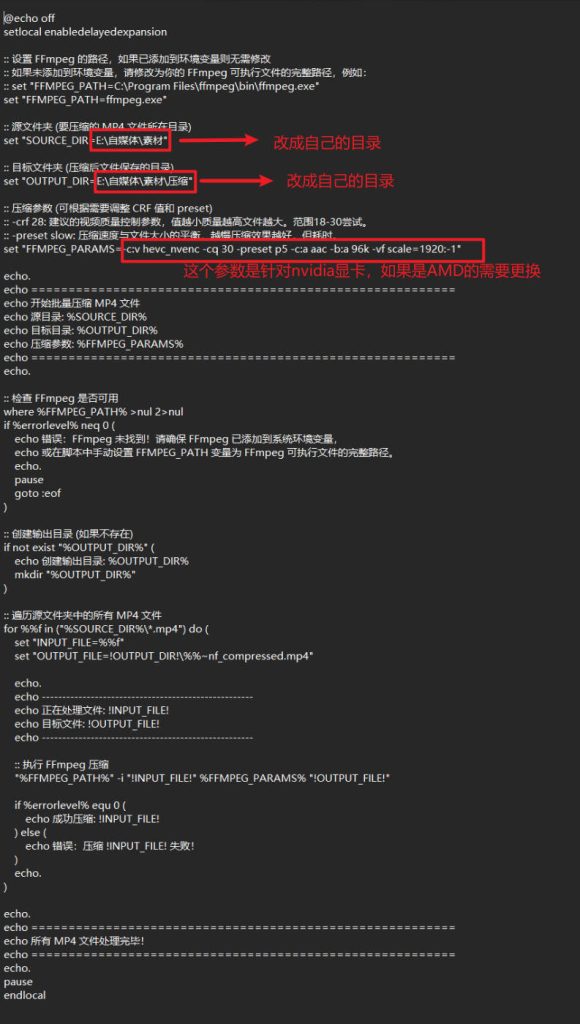
通过GPU压缩视频程序下载

給大家推荐一个通过gpu对视频文件进行压缩处理的程序,压缩后的视频在画质上基本无损。(用肉眼看基本上看不出差别)

下载地址如下:

通过网盘分享的文件:视频压缩程序文件.rar
链接: https://pan.baidu.com/s/1POLZgVYlzL4F2nvxtYd2rg 提取码: kux4

L2TP/IPsec Server auto install script (CentOS 7)

使用方法

1)新建一个名为*.sh的文件(以l2tp-server.sh为例),填入以下脚本代码。
2)导入到CentOS7系统任意目录下,然后执行 sh l2tp-server.sh即可自动配置。

#!/usr/bin/env bash
PATH=/bin:/sbin:/usr/bin:/usr/sbin:/usr/local/bin:/usr/local/sbin:~/bin
export PATH

cur_dir=`pwd`

rootness(){
    if [[ $EUID -ne 0 ]]; then
       echo "Error:This script must be run as root!" 1>&2
       exit 1
    fi
}

tunavailable(){
    if [[ ! -e /dev/net/tun ]]; then
        echo "Error:TUN/TAP is not available!" 1>&2
        exit 1
    fi
}

disable_selinux(){
if [ -s /etc/selinux/config ] && grep 'SELINUX=enforcing' /etc/selinux/config; then
    sed -i 's/SELINUX=enforcing/SELINUX=disabled/g' /etc/selinux/config
    setenforce 0
fi
}

get_opsy(){
    [ -f /etc/redhat-release ] && awk '{print ($1,$3~/^[0-9]/?$3:$4)}' /etc/redhat-release && return
    [ -f /etc/os-release ] && awk -F'[= "]' '/PRETTY_NAME/{print $3,$4,$5}' /etc/os-release && return
    [ -f /etc/lsb-release ] && awk -F'[="]+' '/DESCRIPTION/{print $2}' /etc/lsb-release && return
}

get_os_info(){
    IP=$( ip addr | egrep -o '[0-9]{1,3}\.[0-9]{1,3}\.[0-9]{1,3}\.[0-9]{1,3}' | egrep -v "^192\.168|^172\.1[6-9]\.|^172\.2[0-9]\.|^172\.3[0-2]\.|^10\.|^127\.|^255\.|^0\." | head -n 1 )
    [ -z ${IP} ] && IP=$( wget -qO- -t1 -T2 myip.ipip.net | egrep -o '[0-9]{1,3}\.[0-9]{1,3}\.[0-9]{1,3}\.[0-9]{1,3}')

    local cname=$( awk -F: '/model name/ {name=$2} END {print name}' /proc/cpuinfo | sed 's/^[ \t]*//;s/[ \t]*$//' )
    local cores=$( awk -F: '/model name/ {core++} END {print core}' /proc/cpuinfo )
    local freq=$( awk -F: '/cpu MHz/ {freq=$2} END {print freq}' /proc/cpuinfo | sed 's/^[ \t]*//;s/[ \t]*$//' )
    local tram=$( free -m | awk '/Mem/ {print $2}' )
    local swap=$( free -m | awk '/Swap/ {print $2}' )
    local up=$( awk '{a=$1/86400;b=($1%86400)/3600;c=($1%3600)/60;d=$1%60} {printf("%ddays, %d:%d:%d\n",a,b,c,d)}' /proc/uptime )
    local load=$( w | head -1 | awk -F'load average:' '{print $2}' | sed 's/^[ \t]*//;s/[ \t]*$//' )
    local opsy=$( get_opsy )
    local arch=$( uname -m )
    local lbit=$( getconf LONG_BIT )
    local host=$( hostname )
    local kern=$( uname -r )

    echo "########## System Information ##########"
    echo 
    echo "CPU model            : ${cname}"
    echo "Number of cores      : ${cores}"
    echo "CPU frequency        : ${freq} MHz"
    echo "Total amount of ram  : ${tram} MB"
    echo "Total amount of swap : ${swap} MB"
    echo "System uptime        : ${up}"
    echo "Load average         : ${load}"
    echo "OS                   : ${opsy}"
    echo "Arch                 : ${arch} (${lbit} Bit)"
    echo "Kernel               : ${kern}"
    echo "Hostname             : ${host}"
    echo "IPv4 address         : ${IP}"
    echo 
    echo "########################################"
}


check_sys(){
    local checkType=$1
    local value=$2

    local release=''
    local systemPackage=''

    if [[ -f /etc/redhat-release ]]; then
        release="centos"
        systemPackage="yum"
    elif cat /etc/issue | grep -Eqi "centos|red hat|redhat"; then
        release="centos"
        systemPackage="yum"
    elif cat /proc/version | grep -Eqi "centos|red hat|redhat"; then
        release="centos"
        systemPackage="yum"
    fi

    if [[ ${checkType} == "sysRelease" ]]; then
        if [ "$value" == "$release" ];then
            return 0
        else
            return 1
        fi
    elif [[ ${checkType} == "packageManager" ]]; then
        if [ "$value" == "$systemPackage" ];then
            return 0
        else
            return 1
        fi
    fi
}

versionget(){
    if [[ -s /etc/redhat-release ]];then
        grep -oE  "[0-9.]+" /etc/redhat-release
    else
        grep -oE  "[0-9.]+" /etc/issue
    fi
}

version_check(){
    if check_sys sysRelease centos;then
        local version="`versionget`"
        local main_ver=${version%%.*}        
        if check_sys packageManager yum; then
            if [ "${main_ver}" == "7" ];then
                echo "Current OS version: CentOS ${main_ver} is supported"
                return 0
            else
                echo "Error: CentOS ${main_ver} is not supported, Please re-install OS and try again."
                exit 1
            fi
        fi
    fi
}

preinstall_l2tp(){
    echo
	iprange="192.168.8"
	mypsk="12345678"
	username="test"
	password='test1234'
}

install_l2tp(){

    echo "Adding the EPEL repository..."
    yum -y install epel-release yum-utils
    yum-config-manager --enable epel
    yum -y install ppp libreswan xl2tpd firewalld
    yum_install
}

config_install(){
    cat > /etc/ipsec.conf<<EOF
version 2.0

config setup
    protostack=netkey
    nhelpers=0
    uniqueids=no
    interfaces=%defaultroute
    virtual_private=%v4:10.0.0.0/8,%v4:192.168.0.0/16,%v4:172.16.0.0/12,%v4:!${iprange}.0/24

conn l2tp-psk
    rightsubnet=vhost:%priv
    also=l2tp-psk-nonat

conn l2tp-psk-nonat
    authby=secret
    pfs=no
    auto=add
    keyingtries=3
    rekey=no
    ikelifetime=8h
    keylife=1h
    type=transport
    left=%defaultroute
    leftid=${IP}
    leftprotoport=17/1701
    right=%any
    rightprotoport=17/%any
    dpddelay=40
    dpdtimeout=130
    dpdaction=clear
    sha2-truncbug=yes
EOF

    cat > /etc/ipsec.secrets<<EOF
%any %any : PSK "${mypsk}"
EOF

    cat > /etc/xl2tpd/xl2tpd.conf<<EOF
[global]
port = 1701

[lns default]
ip range = ${iprange}.2-${iprange}.254
local ip = ${iprange}.1
require chap = yes
refuse pap = yes
require authentication = yes
name = l2tpd
ppp debug = yes
pppoptfile = /etc/ppp/options.xl2tpd
length bit = yes
EOF

    cat > /etc/ppp/options.xl2tpd<<EOF
ipcp-accept-local
ipcp-accept-remote
require-mschap-v2
ms-dns 8.8.8.8
ms-dns 8.8.4.4
noccp
auth
hide-password
idle 1800
mtu 1410
mru 1410
nodefaultroute
debug
proxyarp
connect-delay 5000
EOF

    rm -f /etc/ppp/chap-secrets
    cat > /etc/ppp/chap-secrets<<EOF
# Secrets for authentication using CHAP
# client    server    secret    IP addresses
${username}    l2tpd    ${password}       *
EOF

}

yum_install(){

    config_install

    cp -pf /etc/sysctl.conf /etc/sysctl.conf.bak

    echo "# Added by L2TP VPN" >> /etc/sysctl.conf
    echo "net.ipv4.ip_forward=1" >> /etc/sysctl.conf
    echo "net.ipv4.tcp_syncookies=1" >> /etc/sysctl.conf
    echo "net.ipv4.icmp_echo_ignore_broadcasts=1" >> /etc/sysctl.conf
    echo "net.ipv4.icmp_ignore_bogus_error_responses=1" >> /etc/sysctl.conf

    for each in `ls /proc/sys/net/ipv4/conf/`; do
        echo "net.ipv4.conf.${each}.accept_source_route=0" >> /etc/sysctl.conf
        echo "net.ipv4.conf.${each}.accept_redirects=0" >> /etc/sysctl.conf
        echo "net.ipv4.conf.${each}.send_redirects=0" >> /etc/sysctl.conf
        echo "net.ipv4.conf.${each}.rp_filter=0" >> /etc/sysctl.conf
    done
    sysctl -p

    cat > /etc/firewalld/services/xl2tpd.xml<<EOF
<?xml version="1.0" encoding="utf-8"?>
<service>
  <short>xl2tpd</short>
  <description>L2TP IPSec</description>
  <port protocol="udp" port="4500"/>
  <port protocol="udp" port="1701"/>
</service>
EOF
    chmod 640 /etc/firewalld/services/xl2tpd.xml

    systemctl enable ipsec
    systemctl enable xl2tpd
    systemctl enable firewalld

    systemctl status firewalld > /dev/null 2>&1
    if [ $? -eq 0 ]; then
        firewall-cmd --reload
        echo "Checking firewalld status..."
        firewall-cmd --list-all
        echo "add firewalld rules..."
        firewall-cmd --permanent --add-service=ipsec
        firewall-cmd --permanent --add-service=xl2tpd
        firewall-cmd --permanent --add-masquerade
        firewall-cmd --reload
    else
        echo "Firewalld looks like not running, trying to start..."
        systemctl start firewalld
        if [ $? -eq 0 ]; then
            echo "Firewalld start successfully..."
            firewall-cmd --reload
            echo "Checking firewalld status..."
            firewall-cmd --list-all
            echo "adding firewalld rules..."
            firewall-cmd --permanent --add-service=ipsec
            firewall-cmd --permanent --add-service=xl2tpd
            firewall-cmd --permanent --add-masquerade
            firewall-cmd --reload
        else
            echo "Failed to start firewalld. please enable udp port 500 4500 1701 manually if necessary."
        fi
    fi

    systemctl restart ipsec
    systemctl restart xl2tpd
    echo "Checking ipsec status..."
    systemctl -a | grep ipsec
    echo "Checking xl2tpd status..."
    systemctl -a | grep xl2tpd
    echo "Checking firewalld status..."
    firewall-cmd --list-all

}

finally(){

    cd ${cur_dir}
    rm -fr ${cur_dir}/l2tp
    # create l2tp command
    cp -f ${cur_dir}/`basename $0` /usr/bin/l2tp

    echo "Please wait a moment..."
    sleep 5
    ipsec verify
    echo
    echo "If there is no [FAILED] above, you can connect to your L2TP "
    echo "VPN Server with the default Username/Password is below:"
    echo
    echo "Server IP: ${IP}"
    echo "PSK      : ${mypsk}"
    echo "Username : ${username}"
    echo "Password : ${password}"
    echo
    echo "Enjoy it!"
    echo
}


l2tp(){
    clear
    echo
    echo "###############################################################"
    echo "# L2TP VPN Auto Installer                                     #"
    echo "# System Supported: CentOS 7+                                 #"
    echo "###############################################################"
    echo
    rootness
    tunavailable
    disable_selinux
    version_check
    get_os_info
    preinstall_l2tp
    install_l2tp
    finally
}

# Main process
l2tp 2>&1 | tee ${cur_dir}/l2tp.log

bind9+namedmanager实现内网DNS UI界面管理

1、操作系统:centos7.9+bind9+mariadb+namedmanager-v1.9.o

2、修改yum源

cd /etc/yum.repos.d/

vim jethrocarr-c7-public.repo

# CentOS / RHEL 7 Repositories
#
# www.jethrocarr.com
#

# Packages of third party software that extend the OS and won't replace any
# standard OS or EPEL packages. Generally these are always safe to install
# since they won't override anything else that is present on a system if you're
# only using stock repos.
#
# Some of these packages may require packages in jethrocarr-updates.
[jethrocarr-os]
name=jethrocarr-os
baseurl=https://repos.jethrocarr.com/pub/jethrocarr/linux/centos/7/jethrocarr-os/$basearch/
gpgcheck=1
gpgkey=https://repos.jethrocarr.com/jethrocarr_signing_key.gpg
enabled=1

# Provides upgrades to packages included in the distribution (eg: PHP or the
# kernel). These packages could potentially break other applications you have
# installed onto your computer. Some of these packages may require packages
# in jethrocarr-os.
[jethrocarr-updates]
name=jethrocarr-updates
baseurl=https://repos.jethrocarr.com/pub/jethrocarr/linux/centos/7/jethrocarr-updates/$basearch/
gpgcheck=1
gpgkey=https://repos.jethrocarr.com/jethrocarr_signing_key.gpg
enabled=1

# All RPMs developed by Jethro Carr are located in this repository. Some of
# these programs may require packages in jethrocarr-os or jethrocarr-updates
# in order to install and run
[jethrocarr-custom]
name=jethrocarr-custom
baseurl=https://repos.jethrocarr.com/pub/jethrocarr/linux/centos/7/jethrocarr-custom/$basearch/
gpgcheck=1
gpgkey=https://repos.jethrocarr.com/jethrocarr_signing_key.gpg
enabled=1

3、安装软件包

yum install -y namedmanager-www namedmanager-bind bind-chroot

4、修改配置文件named.conf

vim /etc/named.conf
******************************************************************************************************
//
// named.conf
//
// Provided by Red Hat bind package to configure the ISC BIND named(8) DNS
// server as a caching only nameserver (as a localhost DNS resolver only).
//
// See /usr/share/doc/bind*/sample/ for example named configuration files.
//
// See the BIND Administrator's Reference Manual (ARM) for details about the
// configuration located in /usr/share/doc/bind-{version}/Bv9ARM.html
options {
listen-on port 53 { any; };
listen-on-v6 port 53 { ::1; };
directory "/var/named";
dump-file "/var/named/data/cache_dump.db";
statistics-file "/var/named/data/named_stats.txt";
memstatistics-file "/var/named/data/named_mem_stats.txt";
recursing-file "/var/named/data/named.recursing";
secroots-file "/var/named/data/named.secroots";
allow-query { any; };
/* 
- If you are building an AUTHORITATIVE DNS server, do NOT enable recursion.
- If you are building a RECURSIVE (caching) DNS server, you need to enable 
recursion. 
- If your recursive DNS server has a public IP address, you MUST enable access 
control to limit queries to your legitimate users. Failing to do so will
cause your server to become part of large scale DNS amplification 
attacks. Implementing BCP38 within your network would greatly
reduce such attack surface 
*/
recursion yes;
dnssec-enable yes;
dnssec-validation yes;
/* Path to ISC DLV key */
bindkeys-file "/etc/named.root.key";
managed-keys-directory "/var/named/dynamic";
pid-file "/run/named/named.pid";
session-keyfile "/run/named/session.key";
};
logging {
channel default_debug {
file "data/named.run";
severity dynamic;
};
};
zone "." IN {
type hint;
file "named.ca";
};
include "/etc/named.rfc1912.zones";
include "/etc/named.root.key";
include "/etc/named.namedmanager.conf";
*********************************************************************
chown named.root /etc/named.namedmanager.conf
chkconfig --level 35 namedmanager_logpush on

5、配置数据库

systemctl start mariadb
mysqladmin -u root password 123456
/usr/share/namedmanager/resources/autoinstall.pl

6、修改config-bind.php配置文件

vim /etc/namedmanager/config-bind.php
******************************************************************************************************
<?php
/*
Sample Configuration File
Copy this file to config-settings.php
This file should be read-only to the user whom the bind configuration scripts are running as.
*/

/*
API Configuration
*/
$config["api_url"] = "http://192.168.5.137/namedmanager"; // Application Install Location
$config["api_server_name"] = "dns.myd.com"; // Name of the DNS server (important: part of the authentication process)
$config["api_auth_key"] = "dns"; // API authentication key

/*
Log file to find messages from Named. Note that:
* File should be in syslog format
* Named Manager uses tail -f to read it, this can break with logrotate - make sure that either "copytruncate" mode is used, or tail processes are killed
*/
$config["log_file"] = "/var/log/messages";

/*
Lock File
Used to prevent clashes when multiple instances are accidently run.
*/
$config["lock_file"] = "/var/lock/namedmanager_lock";


/*
Bind Configuration Files
Theses files define what files that NamedManager will write to. By design, NamedManager does
not write directly into the master named configuration file, but instead into a seporate file
that gets included - which allows custom configuration and zones to be easily added without
worries of them being over written by NamedManager.

*/
$config["bind"]["version"] = "9"; // version of bind (currently only 9 is supported, although others may work)
$config["bind"]["reload"] = "/usr/sbin/rndc reload"; // command to reload bind config & zonefiles
$config["bind"]["config"] = "/etc/named.namedmanager.conf"; // configuration file to write bind config too
$config["bind"]["zonefiledir"] = "/var/named/"; // directory to write zonefiles too
// note: if using chroot bind, will often be /var/named/chroot/var/named/
$config["bind"]["verify_zone"] = "/usr/sbin/named-checkzone"; // Used to verify each generated zonefile as OK
$config["bind"]["verify_config"] = "/usr/sbin/named-checkconf"; // Used to verify generated NamedManager configuration

/*
Unusual Compatibility Options
*/
// Include a full path to the zonefiles in Bind - useful if Bind lacks a
// directory configuration or you really, really to store you zonefiles
// in a different location
//
// $config["bind"]["zonefullpath"] = "on";

// force debugging on for all users + scripts
// (note: debugging can be enabled on a per-user basis by an admin via the web interface)
//$_SESSION["user"]["debug"] = "on";

?>
****************************************************************************

7、启动服务

systemctl start named
systemctl start httpd
hostnamectl set-hostname dns.myd.com

8、修改配置php.ini

将php.ini文件中的error_reporting = E_ALL改写成error_reporting = E_ALL & ~E_NOTICE(该方法关闭了PHP的提示功能)

9、修改apache配置

# vi /etc/httpd/conf/httpd.conf
# 这里将 ServerName 改为 192.168.65.123(修改成自己主机的IP地址或者域名)
   ServerName 192.168.65.123


  <Directory />
     AllowOverride none
     #    Require all denied
  </Directory>

# vi /etc/httpd/conf.d/namedmanager.conf   
  Alias /namedmanager /usr/share/namedmanager/htdocs

  <Location /namedmanager>
        Order allow,deny
        Allow from all
        AllowOverride None
        Require all granted

  </Location>

10、登录界面配置DNS服务器

web登录http://192.168.65.123/namedmanager/ 默认账号密码setup/setup123
KVM的网络类型

KVM的虚拟化网络 1、Linux Bridge 2、vlan

现在的交换机几乎都是支持 VLAN 的。 通常交换机的端口有两种配置模式: Access 和 Trunk。

Access 口

这些端口被打上了 VLAN 的标签,表明该端口属于哪个 VLAN。 不同 VLAN 用 VLAN ID 来区分,VLAN ID 的 范围是 1-4096。 Access 口都是直接与计算机网卡相连的,这样从该网卡出来的数据包流入 Access 口后就被打上了所在 VLAN 的标签。 Access 口只能属于一个 VLAN。

Trunk 口

假设有两个交换机 A 和 B。 A 上有 VLAN1(红)、VLAN2(黄)、VLAN3(蓝);B 上也有 VLAN1、2、3 那如何让 AB 上相同 VLAN 之间能够通信呢?

办法是将 A 和 B 连起来,而且连接 A 和 B 的端口要允许 VLAN1、2、3 三个 VLAN 的数据都能够通过。

这样的端口就是Trunk口了。 VLAN1、2、3 的数据包在通过 Trunk 口到达对方交换机的过程中始终带着自己的 VLAN 标签。